What kind of people leave jobs at SpaceX, Tesla, McLaren, Google, Mercedes, MIT, Harvard or the Max Planck Society to join a fusion startup in Munich?
Many of our team members moved countries, left prestigious institutions, or walked away from other promising careers to work on one of the hardest engineering challenges in the world: bringing fusion energy to the grid.
When candidates ask us what it’s like to work here, we try to be honest: if you’re energized by solving difficult problems within a grand mission, you’ll thrive here. People join because they want to build something bigger than themselves.
Our values emerged in Proxima’s earliest days, when the team was just eight people thinking not only about technology, but also about a shared way of working together. Three years and 170 people later, those values continue to shape how we hire, collaborate, challenge ideas and move the mission forward every day.
"We come from very different backgrounds," says mechanical engineer Jean-Claude Angles, "but what unites us is the mission." Fusion cannot be built in silos, and you feel that the moment you walk in. The team here is full of builders, problem-solvers, and people who genuinely care about fusion as much as about their team mates. Put a plasma physicist, a business developer and a mechanical engineer together around the same table and things get interesting fast. As financial controller Malav Shah puts it, “If you talk with any of the engineers, they’d gladly give you a one hour lecture on what they’re working on.”
Nowhere is that more obvious than at lunch time. People sit with whoever’s around and conversations drift across completely different parts of the company. The resulting sense of connection matters more than most people realize. The mission is bigger than any individual or team, and we’ve consistently found that the stronger human relationships are, the better the work becomes. “I moved to Munich for Proxima,” says Tomi Wole, who works in people operations, “and the biggest motivating factor was the people.”
It’s also one of the reasons in-person work is important at Proxima. Difficult engineering problems move faster when people are physically together, challenging ideas in real time. "Recruiters, mechanical engineers, communications specialists, technicians and physicists all share the same space,” says Head of Communications Maria Dantz. “That proximity creates a level of collaboration, learning, and ownership that's difficult to replicate any other way.”
The people who thrive most at Proxima are those motivated by impact first: solving hard problems, pushing the project forward, and helping others succeed.
"Fusion's really hard," says stellarator engineer Oliver Lanestead. "And that makes for really interesting engineering." That shared excitement about the difficulty is what helps us keep egos out of the room.
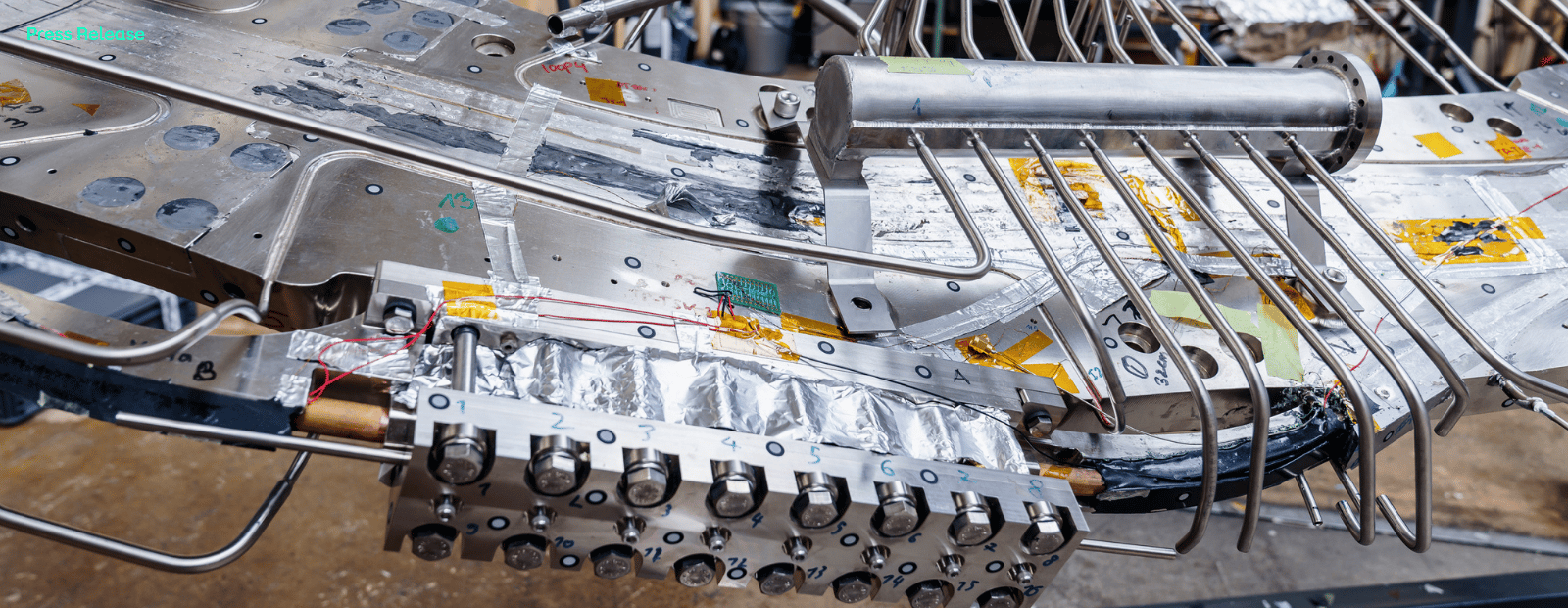
We've found that the team members doing their best work here are the ones who make everyone around them better, too. During our JIANTS magnet development, teams from our Munich and Zurich-based labs came together to deliver the right prototypes during the tight testing window. “It was a beautiful demonstration of people rising to the challenge,” recalls magnet engineer Sofia Viarengo. “Everyone understood what was at stake and pulled together to make it happen.”
We make it a priority to experiment, learn quickly, and move on fast from ideas that aren’t working. "You have to make stuff and make mistakes," says mechanical engineer Nathan Gosney. "Only through iterations can you make decent design decisions."
That mindset only works with a strong culture behind it. “Experiments don't work out, and people make mistakes”, says co-founder and Chief Engineer, Martin Kubie. “That’s always to be expected. The important thing is to be able to openly address setbacks, understand what happened, and improve the systems around them”. Rapid development depends on trust and the ability to learn quickly without blame. We celebrate bias to action, willingness to build quickly, and in the process also learn what doesn’t really work.
Nobody here is interested in spending six months polishing slides about work that could already be tested. A lot of people who join us come from large organizations where a single decision could take months. Here, you can have an idea in the morning and start testing it that same afternoon. As chief of staff Ellen Smeele puts it, “There’s an idea, a sketch or a plan, and then all of a sudden, a few weeks later, it’s real. It’s been built”. That shift toward accelerated momentum catches people off guard at first, usually in the best possible way.
As exciting as our mission is, and as quickly as we want to move, there are moments of pressure, intense discussions and ideas being challenged openly.
A junior engineer questioning a design review, a recruiter pushing back on a hiring decision, or someone changing their mind halfway through a meeting because a better idea emerged are all normal moments at Proxima. “But what if we do the opposite?!” is a classic pushback by Proxima’s co-founder and Chief Scientist, Jorrit Lion.
People come from different parts of the world, different disciplines, and that diversity of perspectives is a major reason we quickly became the fastest growing fusion company in Europe. "People are remarkably willing to change their minds when presented with a better argument," says Jakob Fidler, who works in communications.
What makes this environment work is a shared understanding that everyone is pulling in the same direction, even when perspectives differ. People challenge ideas passionately, then grab lunch together twenty minutes later. Eventually, our success is shared; so is our commitment to move forward.
"I joined Proxima because I wanted to work on something that can change humanity," says mechanical engineer Victor Maurin. When that's your north star, going above and beyond stops feeling exceptional. It becomes part of how you live.
People here are rarely handed neatly defined tasks. They’re often trusted with ambitious and ambiguous projects – the sort of thing that requires leadership and figuring things out as you go. That level of autonomy is energising for some people and uncomfortable for others, but it often becomes one of the things Proxima team members value most.
As Oliver Lanestead puts it: "Every boring, mundane or slow task can be automated, and you're just left with the hard engineering problems that deserve our focus."
That environment won't be for everyone. But for the people it's for, it can bring a real sense of fulfillment and purpose.
Proxima Fusion GmbH, Flößergasse 2, 81369 München, Deutschland
Eingetragen beim Amtsgericht München unter HRB 283423, Geschäftsführer Dr. Francesco Sciortino, Lucio Milanese
Registered at the District Court of Munich under HRB 283423, Managing Directors Dr. Francesco Sciortino, Lucio Milanese
.png)